Blog 08.2026
Is Hybridization the Key to Securing our Energy Systems?
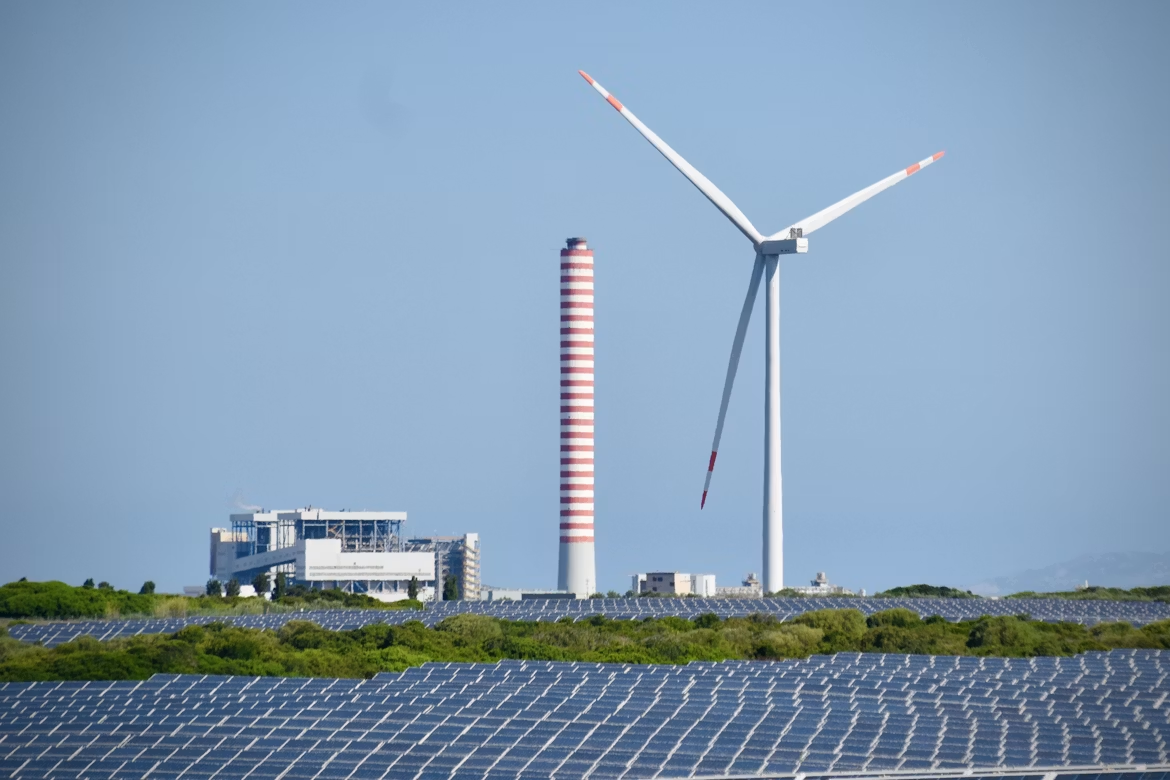
Hybridization, the practice of combining different energy sources with a single grid connection, is quickly becoming central to how energy projects are built and financed. In many cases, it is considered a response to shifting market dynamics, grid constraints, and a growing need for energy resilience.
Structural shifts in the energy sector
This shift is not being driven by technology alone. Instead, it reflects a deeper structural change in what makes renewable energy projects value accretive over time. As more solar energy comes onto the grid, for example, daytime electricity prices are being pushed down, and many projects face curtailment due to grid stability issues. As a result, in some markets, value is no longer determined purely by how much energy a project produces, but how and when that energy is delivered.
Electrification is also increasing demand on energy systems, making secure and reliable access to power more critical than ever. As a result, underlying challenges around energy resilience and supply are now coming into sharper focus.
Battery storage plays a key role in this transition. By enabling developers to shift generation into higher-priced periods, smooth output, reduce exposure to volatility, and delivering grid stability services, storage is moving from a tool for optimization to a core component of project viability.
A practical solution
Against this backdrop, hybridization is emerging as a practical solution. Integrating storage allows projects to capture higher-value pricing periods, reduce curtailment, and improve revenue stability. It also enables better use of existing infrastructure, an increasingly important factor as grid constraints tighten.
In fact, limited grid capacity is now one of the most significant drivers of hybrid development. As connection points become scarcer and more valuable, developers are shifting their focus from maximizing generation in isolation to maximizing the efficiency of each connection. Co-locating storage with generation allows projects to operate more flexibly within these constraints.
This shift is particularly evident in new developments. While retrofitting storage to existing assets remains common, many greenfield projects are now being designed with hybridization in mind from the outset, even if storage is only added later. This reflects a broader change in how projects are conceived, with greater emphasis on flexibility and stability.
Navigating broader challenges
Ultimately, hybridization reflects a broader shift in the energy transition. As renewable generation increases, standalone assets are becoming more exposed to price shocks, curtailment, and volatility. Hybrid systems provide a way to navigate these challenges more effectively, building the resilience of our energy systems.
You may also be interested in

AI and Renewable Energy: A Complex but Critical Alliance
Explore how AI and renewable energy work together to reshape energy production and meet climate goals in a complex global landscape.
Launching JERA Nex bp
Discover the launch of JERA Nex bp, a joint venture with bp focused on offshore wind development and operations with 13GW capacity.

Locally grown clean energy for global impact: Cutting the ribbon at Oxbow Solar Farm
Celebrate the ribbon cutting at Oxbow Solar Farm, a 300MW site marking JERA Nex's growth in US clean energy and progress toward 20GW by 2035.

Reasons to be cheerful: A new way to do renewables
Explore the optimism behind JERA Nex's launch and its commitment to scaling renewable energy despite market challenges.